


Local Changemaker Stories

Bijgewerkt op: 8 jan
Gustave Muteba - Heart and Hands Foundation Congo
1. Where are you originally from, and since when have you been living in the Netherlands?
I am originally from the Democratic Republic of Congo, a vast country located in the heart of Africa. More specifically, I come from the Kasai Province, which is itself situated in the central part of the country. In a symbolic sense, I often say that I come from the very “heart” of our beloved African continent.
I arrived in the Netherlands in December 1999 as a political refugee. Seven months later, the Kingdom of the Netherlands officially granted my family and me political refugee status.

2. Why did you or your parents immigrate to the Netherlands?
After 32 years of dictatorship under Marshal Mobutu in the Democratic Republic of Congo, Laurent-Désiré Kabila took power on 17 May 1997 following a seven-month lightning war that crossed an immense territory comparable in size to Western Europe. Mobutu was forced out, and the Congolese population initially placed great hope in Laurent-Désiré Kabila for the birth of a new Congo oriented toward development and democracy.
At that time, I held several responsibilities: I was a journalist at the Congolese national television, a pastor of a local church, and the president of a charitable foundation supporting war orphans and street children.
Unfortunately, barely one year after taking power, Laurent-Désiré Kabila established a dictatorship even more brutal than that of Marshal Mobutu. As a journalist and pastor, I publicly opposed this regime and mobilized the population against it. I will spare you the full details, but as a result, my wife and I were arrested and imprisoned in a detention cell without any contact with the outside world.
By the grace of God, we managed to escape the Democratic Republic of Congo after a dramatic and dangerous flight and eventually found refuge in the Netherlands. Today, again by God’s grace, we are naturalized Dutch citizens.

3. What type of foundation (NGO) did you establish, and why?
Our foundation was originally established in the Democratic Republic of Congo in the 1990s, with the mission of caring for war orphans and street children. After we were forced to flee the country due to the dictatorship imposed by Laurent-Désiré Kabila, our humanitarian commitment remained deeply rooted in who we are—it is part of our DNA.
In 2011, we therefore extended this work by establishing the same foundation in the Netherlands. The goal was twofold:
to continue supporting our humanitarian projects in the Democratic Republic of Congo, and
to assist refugees from Central Africa living in the Benelux countries, encouraging their integration and respect for the culture and values of their host countries: the Netherlands, Belgium, and Luxembourg.
4. Can you tell me about your most successful project?
Since our official establishment in the Netherlands, we have successfully implemented several major projects, including:
the construction of three residential care centers for abandoned children;
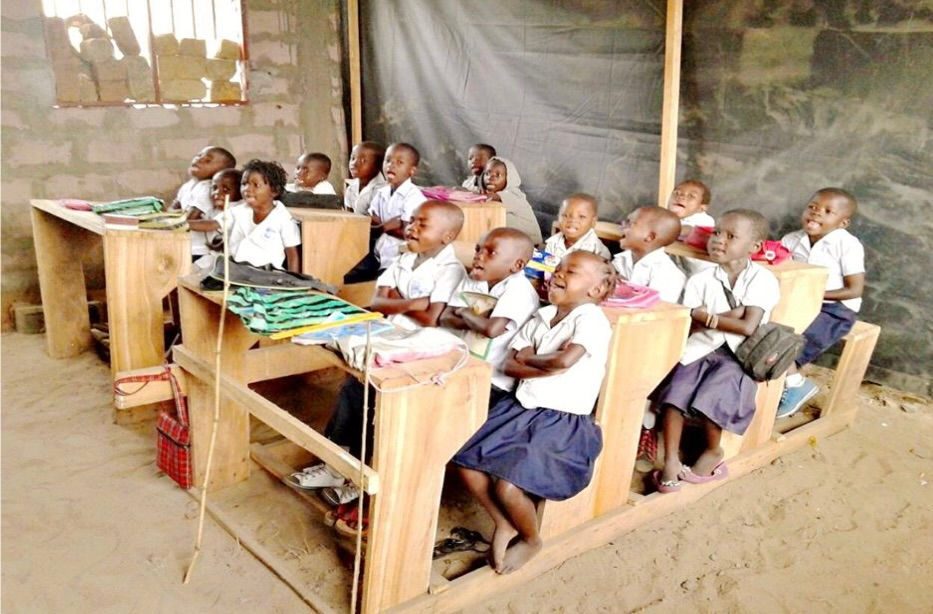
the construction of a primary school in Bibwa.
However, our flagship and ongoing project is the construction of rainwater harvesting reservoirs in areas where no conventional potable water distribution system exists. This project is central to our mission because it directly saves lives, especially those of young children.
To implement this project, we work closely with traditional chiefs and neighborhood leaders to establish steering committees during the construction phase and after completion. These committees are essential, as the reservoirs require maintenance every six months, which involves financial costs.
At the same time, the construction process serves as a vocational training opportunity. We train young single mothers and unemployed young men in masonry skills, enabling them to acquire a trade that provides income and allows them to meet their daily needs.
The impact of this rainwater reservoir project on the local population is substantial and measurable:
a significant reduction in diseases caused by the consumption of unsafe water;
improved school attendance and reduced academic failure among children;
overall improvement in health, dignity, and living conditions.
For fundraising, we currently have a dedicated office supporting our efforts. However, given the scale of our humanitarian needs, we aim to expand our partnerships to secure additional funding, as our financial requirements are considerable in order to continue relieving the suffering of the most vulnerable populations.
5. What does collaboration with the local community look like?
Local authorities and community leaders are involved at every stage of our flagship project:
granting authorizations and work permits to operate in remote villages;
identifying the most vulnerable families eligible to benefit from the reservoirs;
selecting young single mothers and unemployed young men who will receive masonry training as a source of sustainable income;
establishing monitoring committees responsible for post-construction oversight and ensuring the mandatory six-monthly maintenance of all reservoirs, which are provided free of charge to the poorest families.
6. What is your main objective for the coming years?
In addition to our ongoing rainwater reservoir construction project, we are planning two major initiatives:
the construction of a vocational training school in Menkao, a semi-rural neighborhood of Kinshasa;
a plastic collection and recycling project aimed at reducing environmental degradation in our cities and villages.
This recycling initiative will also generate income to support partial self-financing, allowing us to build a basic level of financial autonomy and rely on external funding primarily for large-scale projects.
You can find more information on: https://kinderenvancongo.nl/


Opmerkingen